
Air horns are commonly used in construction as a form of communication across large and noisy sites, or in factories and warehouses. They are crucial for quickly notifying workers of dangers like fires, accidents, or evacuations, and are also used daily for traffic control and to signal routine safety drills.
A battery-powered air horn called the Hornet, made by WoodsCan Industries, is now available that performs reliably in cold weather and doesn’t use compressed gas, making it more consistent and transportable than traditional aerosol models. A rechargeable Hornet air horn will operate for over 35 minutes (2,000 seconds) on one battery charge, making it a far superior tool than a disposable gas air horn that will operate for roughly 90 seconds before it is emptied and will need to be replaced.
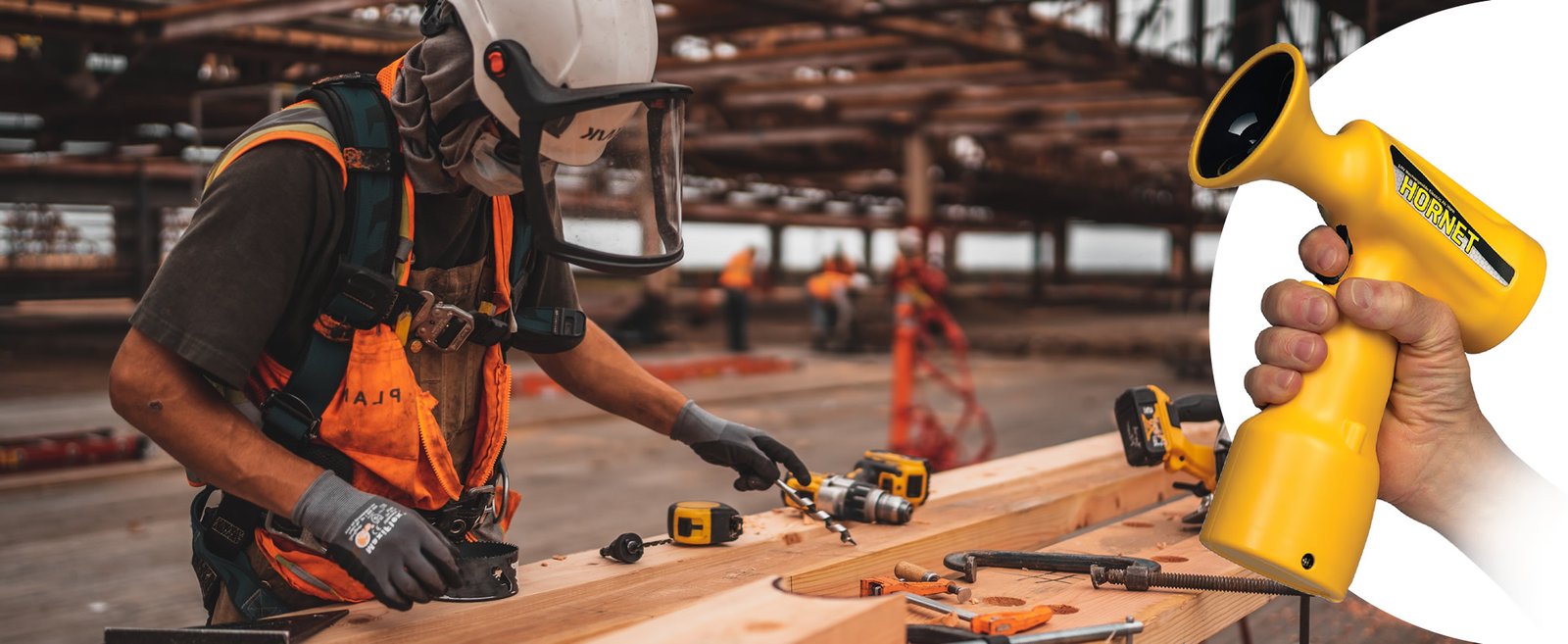
Uses of construction safety air horns:
Emergency Alerts
To signal an immediate emergency like a fire, hazardous material spill, or structural collapse, prompting an evacuation. These air horns are typically part of a wall-mounted emergency station and may not be used for a year or more. Reliability in a time of emergency is key, and the rechargeable electric air horns are much more so in this application.

Hazard Warnings
To immediately alert others to immediate dangers like a falling object, a malfunctioning piece of heavy equipment, or when they are too close to a hazardous area. These air horns are typically carried in hand or hanging on a shoulder strap by workers. Disposable gas air horns would need to be replaced after 60-90 seconds of use, while a rechargeable electric air horn will last for 35 minutes (2,000 seconds) on a single battery charge.

Traffic and Machinery Control
To regularly warn other workers when large machinery, such as cranes or trucks, is moving in an area. Similarly, these air horns would be carried by workers for immediate use, and users would benefit from a longer lasting rechargeable electric air horn.


Safety Drills
To practice evacuation and emergency response protocols.

Here are some considerations when choosing a device:
Frequency of Use
If the pattern of use is on a daily basis, consideration should be given to choosing a rechargeable electric air horn that will last for over 35 minutes per battery charge versus 60-90 seconds for a disposable gas air horn. Similarly, if the air horn is part of an infrequently used emergency station, a rechargeable electric air horn will be more reliable over time, and in adverse weather conditions.
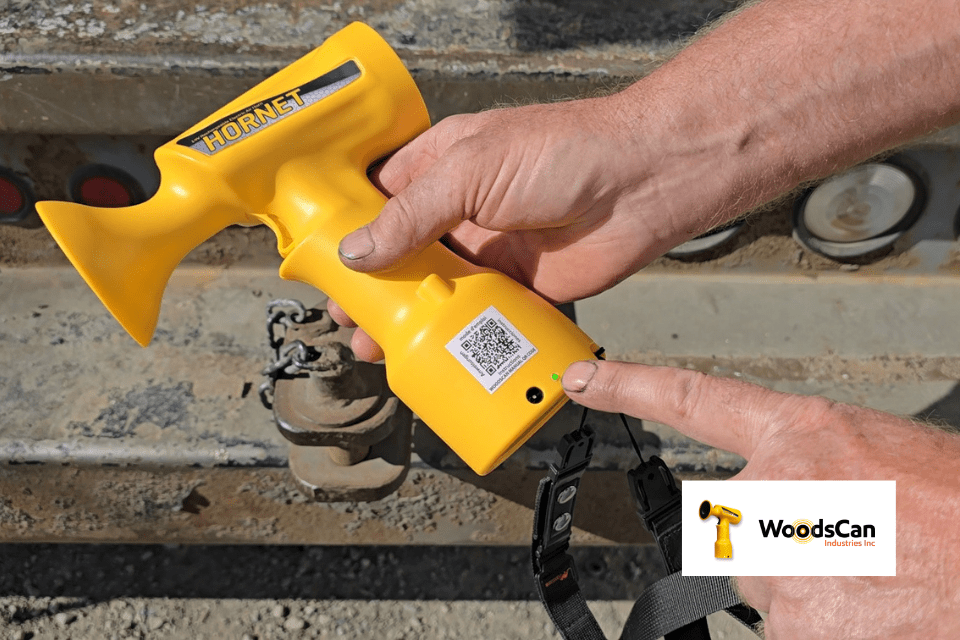
Cold Weather Reliability
Traditional aerosol air horns can malfunction in cold temperatures, but battery-powered air horn models are not significantly affected and will work consistently.
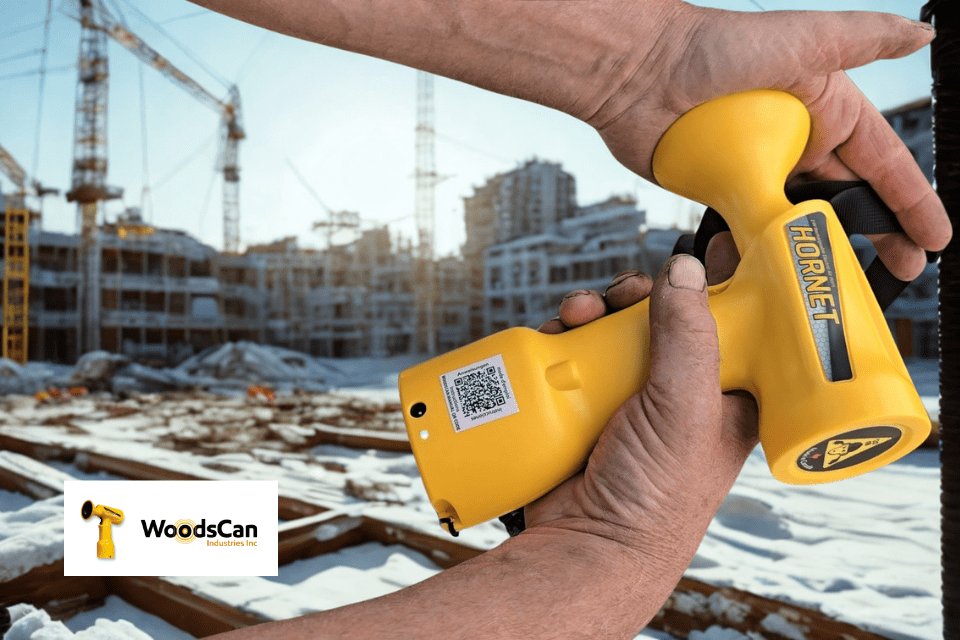
Storage and Maintenance
Compressed gas air horns have a limited shelf life, are prone to leaking, and should be inspected periodically for damage. Rechargeable electric air horns can be stored for over a year and lose only a small percentage of their charge.
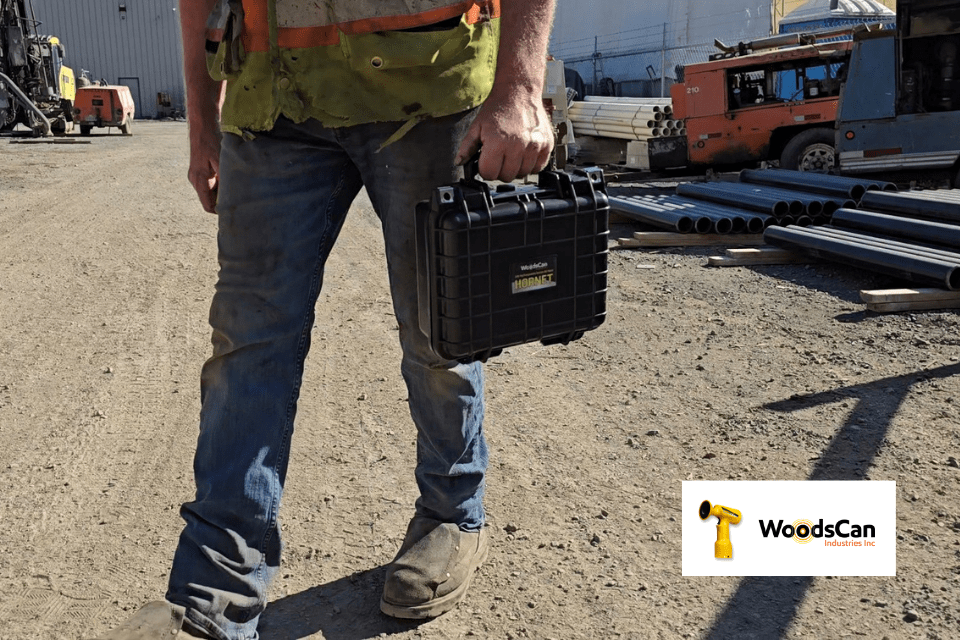
Transportation
Traditional compressed gas air horns cannot be transported on airplanes, but rechargeable electric air horn models are safe for air travel.

Emergency Plans
Air horns are often a component of site-wide emergency plans, with specific patterns of use to communicate different situations. For example, three short blasts may signal an evacuation. While rechargeable electric air horns like the Hornet are more costly initially versus disposable gas air horns, they are more dependable, especially in cold weather, safer to use, and will consistently hold their charge for well over a year before needing to be recharged.