How long does the WoodsCan Hornet rechargeable air horn hold a charge when in storage?
At room temperature and if unused, the WoodsCan Hornet rechargeable air horn will only lose 10% of its charge per


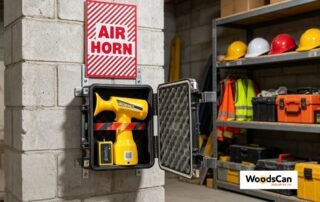
At room temperature and if unused, the WoodsCan Hornet rechargeable air horn will only lose 10% of its charge per

Yes. WoodsCan Hornet air horn batteries can be recycled through most local electronic waste programs, just like any other rechargeable lithium-ion batteries.
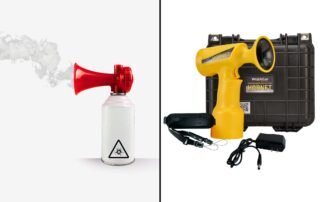
A typical 8 oz disposable air horn will last about 90 seconds at best depending on how long it has been stored and slowly leaking and losing propellant over time, and there is a catch. Using it continuously will cause it to freeze-up, especially in cold weather, within about 10 seconds. When this happens the
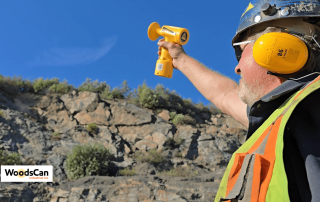
The handheld WoodsCan Hornet rechargeable electric air horn uses a small electric compressor which pumps air through a mechanical trumpet to achieve in excess of 121 decibels of sound. This is the same sound at the same volume as disposable compressed gas air horns, but for a much longer duration (20 times longer) per battery charge than a single disposable gas air horn.

Disposable compressed gas air horns have proven to be unreliable and are extremely bad for the environment. A single 5 oz. can will only last a minute or so at best, it may not work at all in cold weather, and its sound volume diminishes the longer you use it. It also uses an extremely potent greenhouse gas as a propellant versus the WoodsCan Hornet rechargeable electric air horn only uses air, and it will reliably...

A disposable gas air horn is not typically recyclable through regular curbside recycling because it is a pressurized container, which poses a safety hazard unless properly handled. Because of this special handling requirement, the perfectly good metal it is made with often does not get reused. Here are the issues, and here are the possible
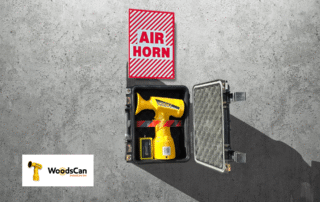
An air horn provides a loud, attention-grabbing signal that can alert rescuers or warn others during power outages, fires, storms, or natural disasters. The sound of an air horn is more typically associated with being alerted to...
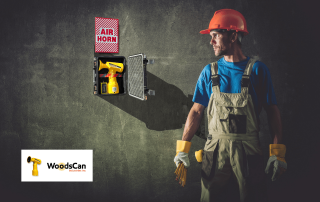
Yes. The Hornet air horn meets typical industrial safety signaling requirements and provides a consistent 121 dB of sound output which is audible across large construction sites.

Air horns are commonly used in construction as a form of communication across large and noisy sites, or in factories and warehouses. They are crucial for quickly notifying workers of dangers like fires, accidents, or evacuations, and are also used daily for traffic control and to signal routine safety drills. A battery-powered air horn called the Hornet, made by WoodsCan Industries, is now available that performs reliably in cold weather and doesn’t use compressed gas, making it more consistent and
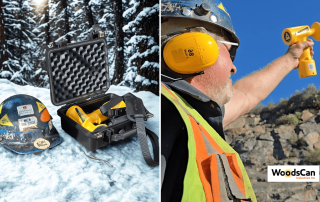
In summary, a rechargeable electric air horn, like the WoodsCan Hornet air horn, performs best in a broad range of temperatures (hot and cold) versus aerosol canister air horns. Here's why: In cold weather, gas air horns lose pressure so they sound weaker, don't last as long, can freeze up, and may not work at